Amidst the wave of intelligent manufacturing globally, equipment operation efficiency and employee training costs have become key indicators of a company's core competitiveness. According to Deloitte's '2024 Global Manufacturing Technology Trends Report', companies adopting 3D animation technology have seen an average reduction of 45% in equipment operation training cycles and a 62% decrease in operational errors. Industrial 3D animation, through its three major technological paths of dynamic visualization, interactive simulation, and full-process decomposition, is reshaping the paradigm of equipment operation in manufacturing, with its influence penetrating all aspects of equipment lifecycle management.
I.Standardized Equipment Operation, Multilingual Barrier-Free Training
Many companies attach great importance to SOPs (Standard Operating Procedures), but face difficulties in effective implementation due to dry text: imprecise descriptions, incomplete product parameters, unprofessional trainers... Transforming SOPs into step-by-step animations can greatly enhance the implementation of standardized product operations.
A machinery factory in Shanghai broke down equipment installation into 12 key steps. Using animation's unique techniques like perspective and hidden views, they demonstrated underground installation steps, leading to a 25% increase in on-site installation efficiency and a reduction in installation error rates by over 50%.
Demonstrating the above animation in different languages can achieve unified operational standards for multinational teams and aid in remote troubleshooting, quickly resolving equipment malfunctions.
II. Reconstructing Training Systems,RapidlyEnhancing Operational Proficiency
Traditional manufacturing equipment training relies on the "master-apprentice" model of experience inheritance, facing issues like fragmented knowledge transfer and long training cycles. Industrial animation builds a standardized training system through step-by-step decomposition and animated demonstrations.
Research data shows that manufacturing companies using 3D animation for training have shortened the period for new employees to master basic equipment operations from an average of 45 days to 18 days or even less, with an improvement in operational compliance rates of 52%. This standardized output not only avoids experience bias but also transforms implicit operational skills into visible explicit knowledge, greatly enhancing the efficiency and accuracy of employee training.
III. Optimizing Production Processes, Empowering Continuous Improvement
Equipment operation animation is not just a training tool; it can also aid production optimization through process visualization analysis. By recreating the entire equipment operation process (the sequence of every operation from raw material input to finished product output) through animation, bottlenecks can be intuitively identified.
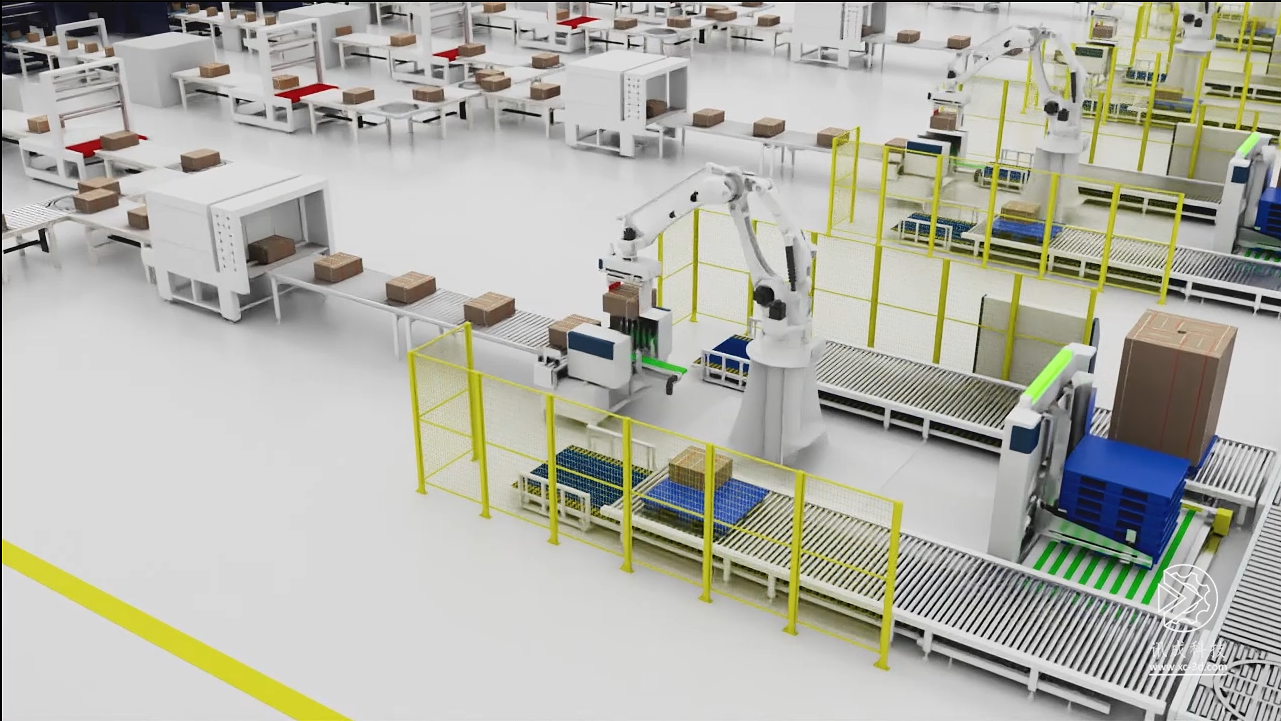
When an intelligent logistics company in Xiamen used animation to demonstrate its production line logistics, they promptly discovered an issue in the original design plan: "multiple stacks of cardboard being packed simultaneously – turning – wrapping, leading to excessive waiting time, potentially affecting the efficiency of the entire production line". They quickly adjusted the plan, resulting in a 32% increase in production line efficiency and effectively resolving the issue, earning high praise from the client.
In equipment upgrade phases, animation can simulate the feasibility of new operational plans: for instance, demonstrating the workflow of "robots replacing manual loading and unloading" and using a timeline to compare efficiency differences between new and old models, providing data support for technical transformation decisions.
[Conclusion] From Operational Tool to Cognitive Revolution
The demonstration value of industrial 3D animation for equipment operation extends beyond being a technical manual; it is a tool for upgrading the cognitive paradigm in manufacturing. By making implicit knowledge explicit, simplifying complex processes, and making risk scenarios controllable, it is reshaping the interactive logic of "human-machine-environment". With the deep integration of 5G, AI, and XR technologies, industrial animation will evolve into core infrastructure for manufacturing's digital transformation, creating sustainable competitive advantages for enterprises.
About Xuncheng Technology
Founded in 2016, with 9 years of professional experience in industrial 3D animation creation, our clients span various types of enterprises, including startups, overseas clients, listed companies, and foreign-funded enterprises. We specialize in providing 3D animation creation for mechanical equipment, high-tech industries, software development, and foreign trade companies. We offer one-stop industrial 3D animation creative services from product sales to after-sales maintenance.
We have provided nearly 3000 minutes of professional animated videos for over 200 manufacturing enterprises.
Whether at exhibition sites or client visits; whether expanding overseas markets or improving after-sales service, we firmly believe that through the power of design, complex products and machinery can be presented in astonishing 3D animations. This not only brings a unique visual experience to clients but also quickly resonates with them.